
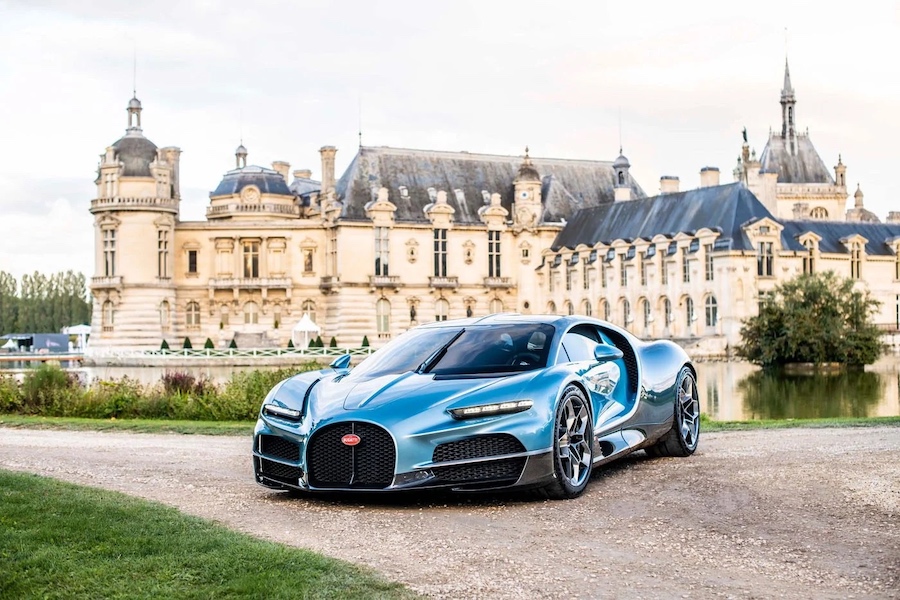
When it comes to the supercar market, it’s near peak fashionability to shit on everything new right now. Too many touchscreens, barely any NA engines, not enough manuals, the best days are behind us, blah blah blah… This somewhat formulaic gripe obviously has a grain of truth to iti but what even is the point of supercars? As male jewelry? As peacocking attractors of the fairer sex? As entrée into certain social circles? As time-fillers for very bored rich people? As clickbait fuel for influencers? As some kind of cosmic retribution against childhood bullies? As the self-actualising fulfilment of bedroom poster dreams? As a mobile and relatively liquid asset class for HNW individuals? Or, as I intend to argue somewhat uniquely today, as peacetime embodiments of our national war engines?ii
In today’s missive we won’t get too lost in the weeds on where one “nation” ends and another begins, but suffice to say that conflict is as fundamental to human flourishing and evolution as water and sunshine are for plant growth; it’s the basic axis around which our planet spins and long-term survival depends. Now this doesn’t mean that wars are some kind of unequivocal “good” in any holistic moral sense, nor inherently net-positive in the more narrow utilitarian sense – indeed as we saw in the bitchslapping of America by AK-wielding Afghani goat-herders it’s very much possible for wars to be an utterly tragic waste of national energy, life, and resources – but it’s also the case that conflict is the ultimate kiln in which our dies are cast, where we may compete for glories that ring out in history, and which serve as singularly powerful stages to propel humanity onwards and upwards. It’s also where kinetics dispose of which thermodynamics hath proposed; where limited time, finite budgets, and our innate ingenuities can at last prove themselves in battle, and from which future peace dividends may be earned and their fruits rightly tasted. Also, yes, where our sexuate species forges actual men out of peacetime gender soup. So ya, it’s pretty essential stuff!
And what does this have to do with supercars, you ask? It turns out, quite a lot! First, let’s look at where we are today, which is of course in the midst of an increasingly undeniable wartime economy. To profitably quote US Brig. Gen. Troy Denomy from his recent presentation at the 18th annual GVSETS conference in Detroit (emphasis added):
“When I talk to brigade commanders, sitting brigade commanders, their number one problem is how do they have and how do they plan for recharge cycles to keep their UASs [unmanned aerial systems] in the air, and they don’t have enough ability to do it organically, so they’re having to meter how many UASs they can actually put in the air, not because of what the mission dictates, but because of how much power they have available. […] New counter-UAS are going to show up. Next [Generation C2] is going to show up. There are other programs that we have to be mindful of coming in. So, how do we solve our power problem across our formations? And it’s not by buying more generators. […] Generators are loud. They create a lot of visual signature. They create a lot of thermal signature.“
So the fossil fuel empire that is the Seven Sisters and its skin-suited “West” are going to need to be more creative than just throwing GE, Mitsubishi, and Rolls Royce nat-gas turbines at the problem of 21st century / 5th-generation warfare.iii Thankfully, it’s Messerschmitt and Panzer manufacturer extraordinaire Mercedes-Benz to the rescue! Unwittingly or otherwise, whether through their dominant F1 hybrid-era Silver Arrows or their 2021 acquisition of British axial-flux electric motor manufacturer YASA, the (other) studs from Stuttgart are exceedingly well positioned for the next few decades of war-focused state-driven industrial policy.
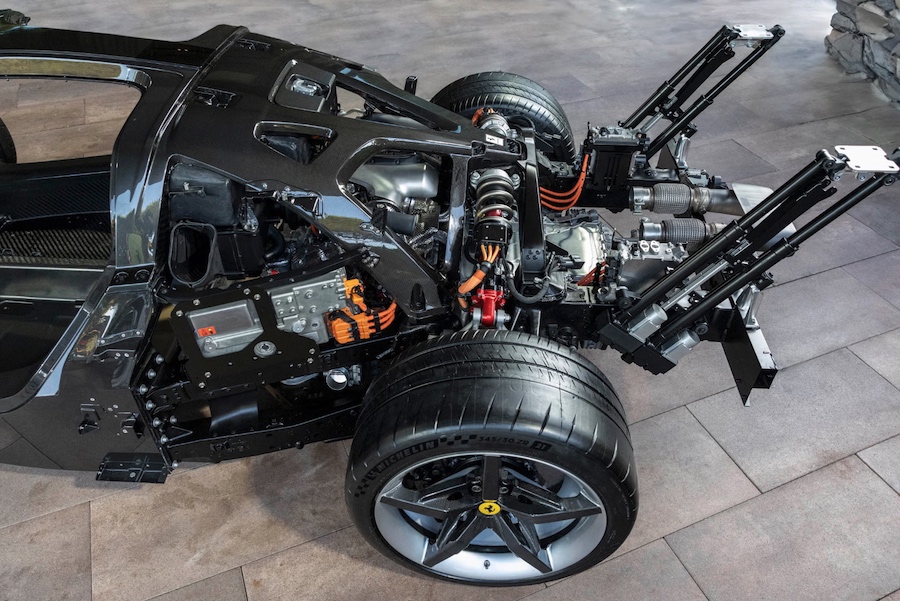
Mercedes hybrid tech can already be found in the Ferrari SF90iv and 296, as well as Lamborghini Revuelto, McLaren Artura, and Koenigsegg Regera,v and it’s now ready to solve more pressing problems in the fields of combat, via Bismarck Analysis (emphasis added):
The high costs of axial-flux motors make it currently implausible for Mercedes to roll them out at scale across their whole product line and most cars simply have no need of extreme power and torque density. Military vehicles, on the other hand, could be much more plausible beneficiaries. Gas and diesel turbines generate large sound and heat signatures, both dangerous in the age of constant drone surveillance of battlefields and improving electronic sensors. While fully electric military vehicles are currently years away from plausibility due to the constraints of battery energy density and size, hybrids that offer the potential for “silent drive” are already being marketed, such as the Oshkosh e-JLTV. Axial-flux motors are also much more physically compact, an important attribute for military vehicles already running short on available space.
Indeed, the answer has been staring us right in the face since the “holy trinity” of hybrid supercars hypercars made such a spectacular media splash in 2015. All the signs were right there in front of us! So this upcoming pivot to military contracts has seeds well-planted, and certainly Mercedes won’t be the only one. Expect Ford, GM, Toyota, and even Tesla to get in on the fight. As well they should, because peacetime consumerism is looking pretty exhausted at this point, and state-driven wartime policy will go a long ways towards resolving the current “demand collapse” and “china-fication” of much of the automotive industry. In spite of wishy washy carbon regulations designed to simulate wartime market discipline over the last decade or so, there’s ultimately no replacement for the real thing. Given the critical importance of attritable weapons systems for 5th-generation industrialised warfare, the near future of the automotive complex manufacturing industry won’t be us lowly consumers and our “needs” (which is to say our entirely unearned entitlements) but rather as engines for our national war machines.vi

So there we have it! We can now see that all along our hybrid supercars were never about our vanities, much less our pallid attempts at status-seeking, but were always just peacetime patronage for privately-funded wartime tech. Could it ever have been otherwise? Because at the end of the day, what’s the difference between “private” and “public” anyways? Wartime has a funny way of blending these two categories and of blurring their apparent distinctions, as those of us with shorter historical memories are about to be reminded of in coming years…
Which leaves us with a final question: do we love our nations? And have we asked lately not what our nation can do for us, but what we can do for our nations? So forget war bonds, those are just boring ass pieces of paper. Buy a hybrid supercar to support the war effort, and let’s have some fun along the way!
- Not to mention that these curiously common gripes are clearly being leveraged (manufactured?) by variously predatory dealers and auction houses to pump yesteryear’s “analog” supercars into stratospheres unwarranted by driving experience alone. And then there’s the variously opportunistic “restomodders” weirdly intent on turning their barn hobbies into hedge funds… ↩
- Or are we so greyed and technologically enfeebled now that we valourise the chutzpah of the horserider storming into the blaze of machine gun fire? Oh wait… ↩
-
Generation Rough era Primary source of advantage What you attack 1st 17th–19th c. Mass + discipline Enemy army 2nd ~1860–1918+ Industrial firepower Enemy army/material 3rd ~1918 onward Maneuver + operational tempo Enemy system/cohesion 4th ~1945 onward Legitimacy + asymmetric networks Enemy political will 5th ~2000–present Information + cognition + networks Enemy perception/decision-making - Maybe turning 40 turned me retarded but the SF90 is starting to look really good at these prices. CAD$550k for 1,000 hp Ferrari that just needs an exhaust? I’d definitely take one over an Aventador for similar money. ↩
- via Bismarck Analysis:
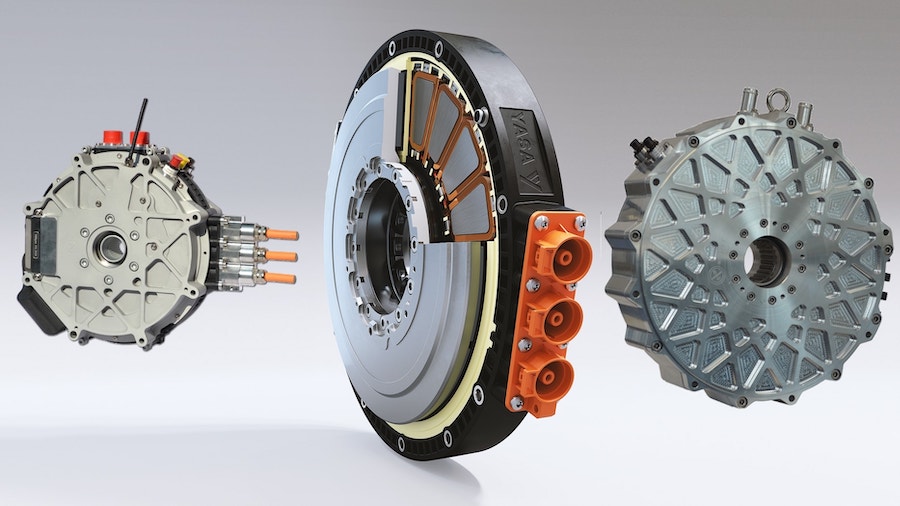
Another plausible way for Mercedes to build a substantial new defense business lies in developing future technology. Due to its 2021 acquisition of British manufacturer YASA, a hardware startup founded in 2009, Mercedes is a world-leader in axial-flux electric motors, an unusual design compared to the far more conventional radial-flux designs. YASA’s axial-flux (”pancake”) design has disc rotors spinning alongside rather than inside the stator, with magnetic flux parallel to the axis.
Since torque is force times radius, the disc geometry generates far more torque from the same electromagnetic force. This allows the axial-flux motors to deliver approximately double the power for half the weight of typical designs. Today, axial-flux motors are almost exclusively used for exclusive supercars: Mercedes is rolling out an engine based around YASA’s technology for the 2026 GT 4-Door Coupé, and has continued to supply Ferrari and Lamborghini, YASA’s existing major customers pre-acquisition. The Lamborghini Temerario plug in-hybrid is a notable example of a car on the market implementing this technology.
- Ironically, consumers were in fact themselves metabolised as peacetime fuel for the nation’s engineering and tacit knowledge networks to transmit themselves across the generations with as little breakage as possible. So yes, your city’s new multi-billion dollar metro system might help you get to work a little bit more conveniently, but mostly it’s so that traditions of complex manufacturing knowledge can be preserved until the next conflict calls them into action. ↩